What You'll Learn
Master Monitoring, Evaluation, Accountability, and Learning (MEAL). Learn to design and implement effective MEAL systems to measure program performance, improve decision-making, and maximize impact.
Course Benefits
Industry Certification
Internationally recognized qualification
Expert Instructors
Learn from industry professionals
Dedicated Support
Assistance during and after training
Practical Skills
Apply knowledge immediately
Course Overview
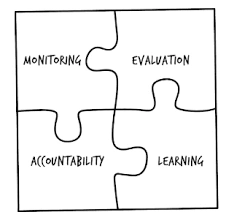
FeaturedMonitoring, evaluation, accountability, and learning (MEAL) are part of everyday programme management and are critical to the success of all programmes. MEAL technical quality is very important across a portfolio of projects. Without an effective MEAL system we would be unable to track progress, make adjustments, discover unplanned effects of programmes, or judge the impact that we have made on the lives of those with whom we are working. A MEAL system also helps individuals and teams to be accountable to stakeholders through information sharing and developing a complaints or feedback mechanism which can help to guide programme implementation. This training introduces participants to MEAL concepts and practices. It will stimulate ideas on how to design and implement monitoring and evaluation processes that strengthen accountability and learning, and so promote project, programme and strategy effectiveness.
Course Duration
10 Days
Who Should Attend
- Program managers and officers
- Monitoring and evaluation specialists
- Accountability and learning officers
- Project coordinators and supervisors
- Development practitioners
- Humanitarian aid workers
- Anyone involved in program planning, implementation, and evaluation
Course Impact
Organizational Impact
-
Improve project outcomes with clear systems for tracking and measuring impact.
-
Strengthen accountability and transparency with stakeholders.
-
Support data-driven decisions through reliable performance analysis.
Personal Impact
-
Gain in-demand skills to measure and demonstrate project value.
-
Advance into senior project management or M&E specialist roles.
-
Contribute strategically by showcasing the real impact of your work.
Course Objectives
By the end of this course, participants will be able to
- Understand the core concepts and components of the MEAL framework.
- Design and implement MEAL systems for development and humanitarian programs.
- Utilize various MEAL tools and techniques for data collection, analysis, and reporting.
- Integrate accountability mechanisms into program planning and implementation.
- Foster a learning culture within organizations to continuously improve program outcomes.
- Develop and manage effective evaluation processes to assess program impact.
- Enhance skills in communicating MEAL findings to stakeholders.
Course Outline
Module 1: Introduction Monitoring & Evaluation
- M&E and the project/programme cycle
- Importance of M&E
- Purposes and uses of M&E
- Identifying gaps in M&E
- Barriers to effective M&E
Monitoring, Evaluation, Accountability and Learning (MEAL) overview
- Introduction to MEAL
- MEAL Components
- Purposes and functions of MEAL
- MEAL approach
- How MEAL changes M&E
- Challenges to MEAL
Module 2: Frameworks and MEAL Cycle
- Frameworks and approaches informing MEAL
- The language used in MEAL
- The MEAL cycle
- Exploring key elements of a MEAL plan
- Defining indicators
- Designing, implementation and management of a MEAL framework
Module 3: MEAL Planning and Budgeting
MEAL planning
- Planning and budgeting of MEAL
- Planning and Budgeting relationship.
- Tools for planned monitoring and evaluation activities
- How do I get started? - Practical’s and application
- Identifying project/programme goals.
- Identifying project/programme indicators and targets.
- Selecting data collection methods and data sources for prioritized indicators in your MEAL plan
- Decide upon your data analysis, quality assurance/validation, and management strategy.
- Identify your strategy for reporting and disseminating data.
MEAL Budgeting
- Activities based MEAL budgeting
- Components of the Budget
- Exercise: MEAL Plan and corresponding budget
Module 4: Accountability and Learning
- Meaning of accountability mean in practice
- Aspects of accountability.
- Importance of Accountability
- Information sharing
- Participation
- Handling Complaints
- Learning and its role
- Exercise: Incorporating Accountability and Learning in Projects
Module 5: Baseline and evaluation design and management
- The purpose and use of baselines and evaluations
- Purpose and use of needs assessments, situation analysis,
- Baselines, evaluations and real-time reviews
- Importance of baseline for monitoring and evaluation
- Steps in planning and undertaking baselines and evaluations
Module 6: Survey Planning and Implementation Types of surveys
- The survey design and process
- Methods of survey sampling and determining the Sample size
- Data collection techniques and tools
- Designing survey questionnaires
- Pretesting research tools for Validity and Reliability
- Conducting the survey
- After the survey
- Exercise: Planning for a survey
Module 7: MEAL Data Collection: Mobile Based Data Collection (ODK)
- Introduction to mobile phone data collection
- Advantages and challenges of Mobile Applications
- Components of Open Data Kit (ODK)
- Install ODK Collect into mobile devices
- Designing and creating Forms
- ODK Aggregate Server
- Exercise: Mobile Based Data Collection using ODK
Module 8: Data Quality Management, Tabulation and graphical presentation of data (SPSS/Stata/R)
Data quality Management
- Types of variables (Numerical, discrete variables, dummy variables,
- Entering categorical and continuous data
- Defining and labeling variables
- Validation and Sorting variables
- Transforming, recording and computing variables
Tabulation and graphical presentation of data
- Descriptive Statistics
- Frequency Tables
- Tables for categorical data
- Graphs and charts
- Exercise: Data Management, Graphing, and Tabulations
Module 9: Data analysis and interpretation and use (SPSS/Stata/R)
- Hypothesis testing
- Comparing Means.
- Regression and Correlation analysis
- Interpreting the data
- Introduction to analyzing qualitative data and qualitative data analysis software
- Exercise: Data Analysis and interpretation
Module 10: Project reporting through MEAL
- Use of MEAL data in Reporting
- Communication activities to partners and stakeholders
- Lessons learned
- Decisions making
Prerequisites
Course Administration Details
Customized Training
This training can be tailored to your institution needs and delivered at a location of your choice upon request.
Requirements
Participants need to be proficient in English.
Training Fee
The fee covers tuition, training materials, refreshments, lunch, and study visits. Participants are responsible for their own travel, visa, insurance, and personal expenses.
Certification
Upon successful completion of this course, participants will be issued with a certificate from Ideal Workplace Solutions certified by the National Industrial Training Authority (NITA) under License NO: NITA/TRN/2734.
Accommodation
Accommodation can be arranged upon request. Contact via email for reservations.
Payment
Payment should be made before the training starts, with proof of payment sent to outreach@idealworkplacesolutions.org.
For further inquiries, please contact us on details below:
Email: outreach@idealworkplacesolutions.org
Mobile: +254759708394
Register for the Course
Select a date and location that works for you.
In-Person Training Schedules
January 2026
| Date | Days | Venue | Fee (VAT Incl.) | Register |
|---|---|---|---|---|
| 5 Jan - 16 Jan 2026 | 10 days | Nairobi, Kenya | KES 198,000 | USD 2,800 | Enroll Now |
| 5 Jan - 16 Jan 2026 | 10 days | Cape Town, South Africa | USD 7,500 | Enroll Now |
| 5 Jan - 16 Jan 2026 | 10 days | Dubai, United Arabs Emirates | USD 8,000 | Enroll Now |
| 5 Jan - 16 Jan 2026 | 10 days | Zanzibar, Tanzania | USD 4,400 | Enroll Now |
| 12 Jan - 23 Jan 2026 | 10 days | Mombasa, Kenya | KES 230,000 | USD 3,000 | Enroll Now |
| 12 Jan - 23 Jan 2026 | 10 days | Kigali, Rwanda | USD 3,800 | Enroll Now |
| 12 Jan - 23 Jan 2026 | 10 days | Accra, Ghana | USD 7,200 | Enroll Now |
| 12 Jan - 23 Jan 2026 | 10 days | Kampala, Uganda | USD 3,800 | Enroll Now |
| 19 Jan - 30 Jan 2026 | 10 days | Dar es Salaam, Tanzania | USD 4,300 | Enroll Now |
| 19 Jan - 30 Jan 2026 | 10 days | Johannesburg, South Africa | USD 6,500 | Enroll Now |
| 19 Jan - 30 Jan 2026 | 10 days | Nakuru, Kenya | KES 210,000 | USD 2,800 | Enroll Now |
| 19 Jan - 30 Jan 2026 | 10 days | Dakar, Senegal | USD 6,000 | Enroll Now |
| 26 Jan - 6 Feb 2026 | 10 days | Pretoria, South Africa | USD 6,300 | Enroll Now |
| 26 Jan - 6 Feb 2026 | 10 days | Kisumu, Kenya | KES 210,000 | USD 3,000 | Enroll Now |
| 26 Jan - 6 Feb 2026 | 10 days | Naivasha, Kenya | KES 210,000 | USD 2,800 | Enroll Now |
| 26 Jan - 6 Feb 2026 | 10 days | Arusha, Tanzania | USD 4,300 | Enroll Now |
USD 3,000
USD 2,800
Request Custom Training
We offer customized training solutions tailored to your organization's specific needs:
- Training at your preferred location
- Customized content to address your specific challenges
- Flexible scheduling to accommodate your team
- Cost-effective solution for training multiple employees
Early-bird Offer
Special pricing ends in:
Recent Activity
Additional Options
Customize your training experienceFrequently Asked Questions
Find answers to common questions about this course
You May Also Be Interested In
Explore more courses in this category
 Intermediate
Training on Monitoring, Evaluation, Reporting & Learning (MERL) for Peacebuilding
Learn to design conflict-sensitive MERL frameworks and peace indicators to stren...
 Intermediate
Training on International Workshop on Design and Implementation of Service Delivery Surveys
Enhance your skills in designing and managing Service Delivery Surveys to improv...
 Advanced
Training on Monitoring & Evaluation using Mobile Technology
Master Monitoring & Evaluation using Mobile Technology. Learn to leverage mo...
 Intermediate
Training on Advanced Computer Skills for Office Administrators and Secretaries
Upgrade your digital skills with advanced computer training tailored for office...
Intermediate
Training on Monitoring, Evaluation, Reporting & Learning (MERL) for Peacebuilding
Learn to design conflict-sensitive MERL frameworks and peace indicators to stren...
Intermediate
Training on International Workshop on Design and Implementation of Service Delivery Surveys
Enhance your skills in designing and managing Service Delivery Surveys to improv...
Advanced
Training on Monitoring & Evaluation using Mobile Technology
Master Monitoring & Evaluation using Mobile Technology. Learn to leverage mo...
Intermediate
Training on Advanced Computer Skills for Office Administrators and Secretaries
Upgrade your digital skills with advanced computer training tailored for office...
Training on Monitoring, Evaluating, Accountability, and Learning (MEAL)
Next class starts 5 Jan 2026

Subscribe to our Weekly Newsletter!
Get updates on the latest posts and more from Ideal Workplace Solutions straight to your inbox.
About Us

Take your career to the next level with our industry-leading training programs. Designed to build skills, boost confidence and drive success, we empower professionals like you to excel in your current role or explore new opportunities.
Quick Links