What You'll Learn
Master remote sensing applications in agriculture. Learn to monitor crop health, assess yield potential, and optimize agricultural practices using satellite and drone imagery.
Course Benefits
Industry Certification
Internationally recognized qualification
Expert Instructors
Learn from industry professionals
Dedicated Support
Assistance during and after training
Practical Skills
Apply knowledge immediately
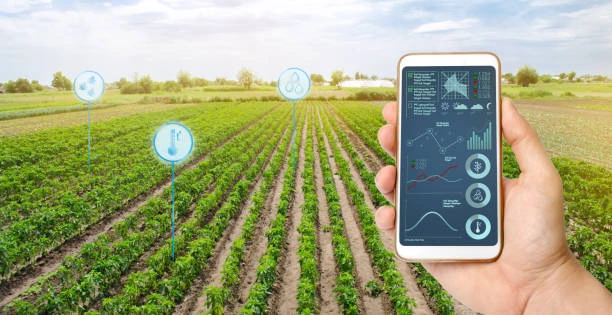
Course Overview
FeaturedThis course provides an in-depth understanding of how remote sensing technologies can be effectively applied in agriculture. Participants will explore the various techniques and tools used to collect and analyze remote sensing data, focusing on improving agricultural productivity, monitoring crop health, managing natural resources, and supporting sustainable farming practices. Through practical examples and case studies, learners will gain the skills needed to apply remote sensing in real-world agricultural scenarios.
Course Duration
10 Days
Who Should Attend
- Agricultural scientists and researchers
- Agronomists and farm managers
- Environmental consultants and natural resource managers
- GIS specialists and remote sensing professionals
- Students and academicians interested in precision agriculture
- Government and non-governmental organization (NGO) professionals working in agriculture and rural development
Course Impact
Organisational Impact
-
Enhances agricultural productivity through data-driven monitoring of crops, soil, and natural resources.
-
Supports precision farming practices, reducing costs and improving yield quality.
-
Strengthens capacity to detect and address issues such as pests, diseases, and water stress early.
-
Promotes sustainable agriculture by optimizing resource use and reducing environmental impact.
-
Builds organisational expertise in applying cutting-edge remote sensing technologies to agricultural operations.
Personal Impact
-
Equips participants with practical skills in applying remote sensing to agricultural challenges.
-
Expands career opportunities in precision farming, agribusiness, research, and consultancy.
-
Builds confidence in analyzing satellite imagery and aerial data for crop health and resource management.
-
Enhances technical capacity to apply geospatial tools for sustainable and efficient farming practices.
-
Empowers participants to contribute to innovations that improve food security and rural development.
Course Objectives
By the end of this course, participants will be able to:
- Understand the fundamentals of remote sensing and its relevance to agriculture.
- Learn to use remote sensing tools and technologies for crop monitoring and management.
- Analyze remote sensing data to assess crop health, soil moisture, and other vital parameters.
- Apply remote sensing techniques to support precision agriculture practices.
- Evaluate the role of remote sensing in sustainable agriculture and natural resource management.
- Integrate remote sensing data with Geographic Information Systems (GIS) for comprehensive agricultural analysis.
- Understand the applications of satellite and drone imagery in agriculture.
- Develop skills to interpret and utilize multispectral and hyperspectral remote sensing data.
- Learn to design and implement remote sensing projects for agricultural purposes.
- Explore the latest trends and innovations in remote sensing technology for agriculture.
Course Outline
Module 1: Introduction to Remote Sensing in Agriculture
- Overview of remote sensing technology and its applications in agriculture.
- Key concepts: electromagnetic spectrum, spatial resolution, spectral bands.
Module 2: Remote Sensing Platforms and Sensors
- Types of remote sensing platforms: satellites, UAVs, and airborne systems.
- Overview of different sensors used in agriculture: multispectral, hyperspectral, thermal.
Module 3: Crop Monitoring and Management
- Techniques for monitoring crop growth and development using remote sensing.
- Identifying crop stress, diseases, and pest infestations from remote sensing data.
Module 4: Soil Moisture and Irrigation Management
- Assessing soil moisture levels using remote sensing.
- Application of remote sensing in optimizing irrigation practices.
Module 5: Vegetation Indices and Their Applications
- Calculation and interpretation of vegetation indices (NDVI, EVI).
- Using vegetation indices for yield prediction and crop health assessment.
Module 6: Precision Agriculture and Variable Rate Technology (VRT)
- Integrating remote sensing with precision agriculture practices.
- Implementing VRT based on remote sensing data for site-specific crop management.
Module 7: Mapping and Monitoring Crop Water Use
- Estimating evapotranspiration using remote sensing.
- Monitoring crop water use efficiency and drought assessment.
Module 8: Use of Drones in Agricultural Remote Sensing
- Advantages and challenges of using UAVs in agriculture.
- Practical applications of drone-based remote sensing for crop scouting and mapping.
Module 9: Satellite Remote Sensing for Agricultural Policy and Decision Making
- Role of satellite imagery in supporting agricultural policy and planning.
- Case studies on the use of remote sensing in agricultural decision-making.
Module 10: Case Studies and Future Trends in Agricultural Remote Sensing
- Real-world examples of successful remote sensing applications in agriculture.
- Exploration of emerging technologies and future trends in the field.
Prerequisites
Course Administration Details
Customized Training
This training can be tailored to your institution needs and delivered at a location of your choice upon request.
Requirements
Participants need to be proficient in English.
Training Fee
The fee covers tuition, training materials, refreshments, lunch, and study visits. Participants are responsible for their own travel, visa, insurance, and personal expenses.
Certification
Upon successful completion of this course, participants will be issued with a certificate from Ideal Workplace Solutions certified by the National Industrial Training Authority (NITA) under License NO: NITA/TRN/2734.
Accommodation
Accommodation can be arranged upon request. Contact via email for reservations.
Payment
Payment should be made before the training starts, with proof of payment sent to outreach@idealworkplacesolutions.org.
For further inquiries, please contact us on details below:
Email: outreach@idealworkplacesolutions.org
Mobile: +254759708394
Register for the Course
Select a date and location that works for you.
In-Person Training Schedules
January 2026
| Date | Days | Venue | Fee (VAT Incl.) | Register |
|---|---|---|---|---|
| 5 Jan - 16 Jan 2026 | 10 days | Nairobi, Kenya | KES 198,000 | USD 2,800 | Enroll Now |
| 5 Jan - 16 Jan 2026 | 10 days | Cape Town, South Africa | USD 7,500 | Enroll Now |
| 5 Jan - 16 Jan 2026 | 10 days | Dubai, United Arabs Emirates | USD 8,000 | Enroll Now |
| 5 Jan - 16 Jan 2026 | 10 days | Zanzibar, Tanzania | USD 4,400 | Enroll Now |
| 12 Jan - 23 Jan 2026 | 10 days | Mombasa, Kenya | KES 230,000 | USD 3,000 | Enroll Now |
| 12 Jan - 23 Jan 2026 | 10 days | Kigali, Rwanda | USD 3,800 | Enroll Now |
| 12 Jan - 23 Jan 2026 | 10 days | Accra, Ghana | USD 7,200 | Enroll Now |
| 12 Jan - 23 Jan 2026 | 10 days | Kampala, Uganda | USD 3,800 | Enroll Now |
| 19 Jan - 30 Jan 2026 | 10 days | Dar es Salaam, Tanzania | USD 4,300 | Enroll Now |
| 19 Jan - 30 Jan 2026 | 10 days | Johannesburg, South Africa | USD 6,500 | Enroll Now |
| 19 Jan - 30 Jan 2026 | 10 days | Nakuru, Kenya | KES 210,000 | USD 2,800 | Enroll Now |
| 19 Jan - 30 Jan 2026 | 10 days | Dakar, Senegal | USD 6,000 | Enroll Now |
| 26 Jan - 6 Feb 2026 | 10 days | Pretoria, South Africa | USD 6,300 | Enroll Now |
| 26 Jan - 6 Feb 2026 | 10 days | Kisumu, Kenya | KES 210,000 | USD 3,000 | Enroll Now |
| 26 Jan - 6 Feb 2026 | 10 days | Naivasha, Kenya | KES 210,000 | USD 2,800 | Enroll Now |
| 26 Jan - 6 Feb 2026 | 10 days | Arusha, Tanzania | USD 4,300 | Enroll Now |
USD 3,000
USD 2,800
Request Custom Training
We offer customized training solutions tailored to your organization's specific needs:
- Training at your preferred location
- Customized content to address your specific challenges
- Flexible scheduling to accommodate your team
- Cost-effective solution for training multiple employees
Early-bird Offer
Special pricing ends in:
Recent Activity
Additional Options
Customize your training experienceFrequently Asked Questions
Find answers to common questions about this course
You May Also Be Interested In
Explore more courses in this category
 Advanced
Training on GIS and Remote Sensing for Sustainable Forest Monitoring and Management
Learn GIS/RS tools for forest cover mapping, deforestation monitoring, and clima...
 Advanced
Training on Development of Web-Based GIS Applications using QGIS and OpenGeo Suite
Learn to design and deploy web-based GIS applications using QGIS and OpenGeo Sui...
 Intermediate
Training on GIS Mapping and Spatial Analysis for Economics and Business
Gain practical skills in GIS mapping and spatial analysis to support economic pl...
 Foundation
Training on Introduction to Python for GIS
Master Python for GIS and unlock the power of geospatial data. Learn to automate...
Advanced
Training on GIS and Remote Sensing for Sustainable Forest Monitoring and Management
Learn GIS/RS tools for forest cover mapping, deforestation monitoring, and clima...
Advanced
Training on Development of Web-Based GIS Applications using QGIS and OpenGeo Suite
Learn to design and deploy web-based GIS applications using QGIS and OpenGeo Sui...
Intermediate
Training on GIS Mapping and Spatial Analysis for Economics and Business
Gain practical skills in GIS mapping and spatial analysis to support economic pl...
Foundation
Training on Introduction to Python for GIS
Master Python for GIS and unlock the power of geospatial data. Learn to automate...
Training on Remote Sensing Applications in Agriculture
Next class starts 5 Jan 2026

Subscribe to our Weekly Newsletter!
Get updates on the latest posts and more from Ideal Workplace Solutions straight to your inbox.
About Us

Take your career to the next level with our industry-leading training programs. Designed to build skills, boost confidence and drive success, we empower professionals like you to excel in your current role or explore new opportunities.
Quick Links